
Whole-Person Wellness in Senior Care: Supporting More Than Physical Health
National Wellness Month gives senior living and healthcare organizations an opportunity to look beyond traditional definitions of wellness. Physical health remains essential, but residents and patients also need emotional comfort, social connection, cognitive stimulation, and spiritual support.
A whole-person approach recognizes that each of these areas can influence how someone experiences the day. Wellness is not limited to scheduled exercise classes, therapy appointments, or clinical goals. It can also be supported through music, conversation, reflection, shared activities, and familiar routines.
Wellness Happens in Everyday Moments
Some of the most meaningful wellness experiences happen outside formal programs. A familiar song during morning care may create a more comfortable start to the day, while music during a walking group may bring energy and rhythm to movement.
A prayer or meditation may offer reassurance during illness or transition. An audiobook or radio program may provide companionship during a quiet afternoon.
Communities can support wellness throughout:
- Morning routines and transitions
- Dining and social gatherings
- Movement and exercise programs
- Quiet periods between activities
- Evening routines and relaxation
- Moments of illness, grief, or uncertainty
When wellness is incorporated into everyday routines, it becomes part of the care culture rather than a separate activity.
Supporting Emotional and Social Wellness
Residents may experience anxiety, loneliness, grief, frustration, or changes in independence. Emotional wellness programs should give people ways to feel comfortable, express themselves, and remain connected to familiar parts of their identity.
Music can be especially meaningful because it is often associated with personal memories and relationships. A familiar song may encourage conversation, support a routine, or make the environment feel more personal.
Living in a community does not automatically prevent loneliness. Meaningful engagement should create experiences that encourage participation, conversation, and belonging rather than simply filling time.
These experiences may include:
- Singing familiar songs together
- Listening to classic radio programs
- Participating in music trivia
- Discussing an audiobook or story
- Sharing memories connected to music
- Joining a small-group reflection
Honoring Spiritual Well-Being
For many people, faith and spirituality are closely connected to identity, comfort, and meaning. Spiritual support may be especially important during illness, grief, transition, or end-of-life care.
Inclusive spiritual care should respect different beliefs, traditions, and personal preferences. It should also be available beyond scheduled worship services so people can access prayer, meditation, sacred readings, or quiet reflection when they need them.
Bringing Whole-Person Wellness Into Everyday Care
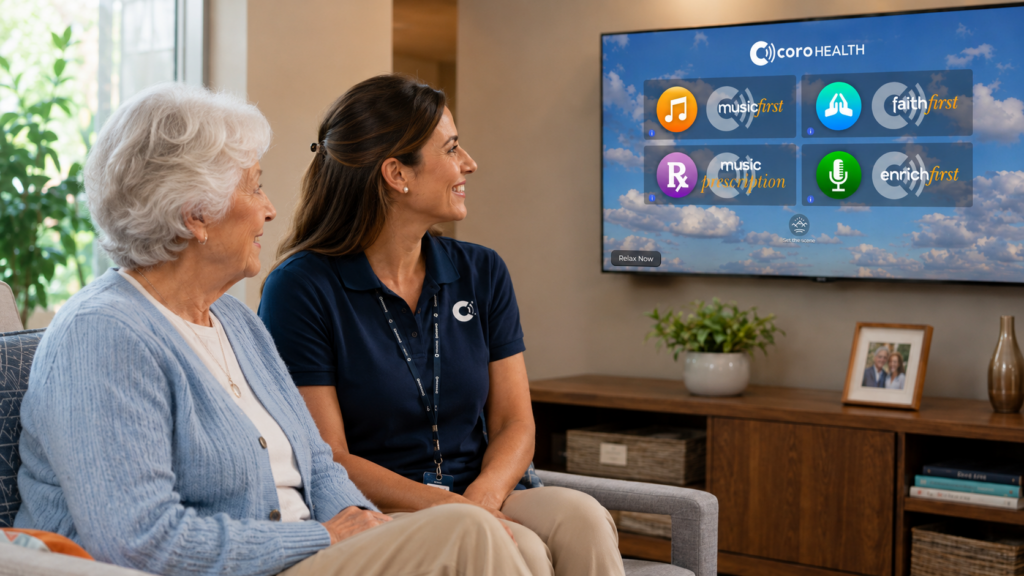
Coro Health helps healthcare organizations support multiple areas of wellness through three connected services.
MusicFirst provides purposeful, fully licensed music for routines, dining, relaxation, movement, and engagement. FaithFirst offers inclusive spiritual content, including prayers, meditations, sacred readings, and reflective programming. EnrichFirst provides audiobooks, sing-alongs, music trivia, CARE Radio, Old Time Radio, Couch Concerts, and other ready-to-use experiences.
Together, these services help care teams create more opportunities for comfort, reflection, participation, and connection throughout the day.
Learn more about Coro Health:
https://corohealth.com/