
Beyond the Clinical Visit: Supporting Whole-Person Care in Home Health
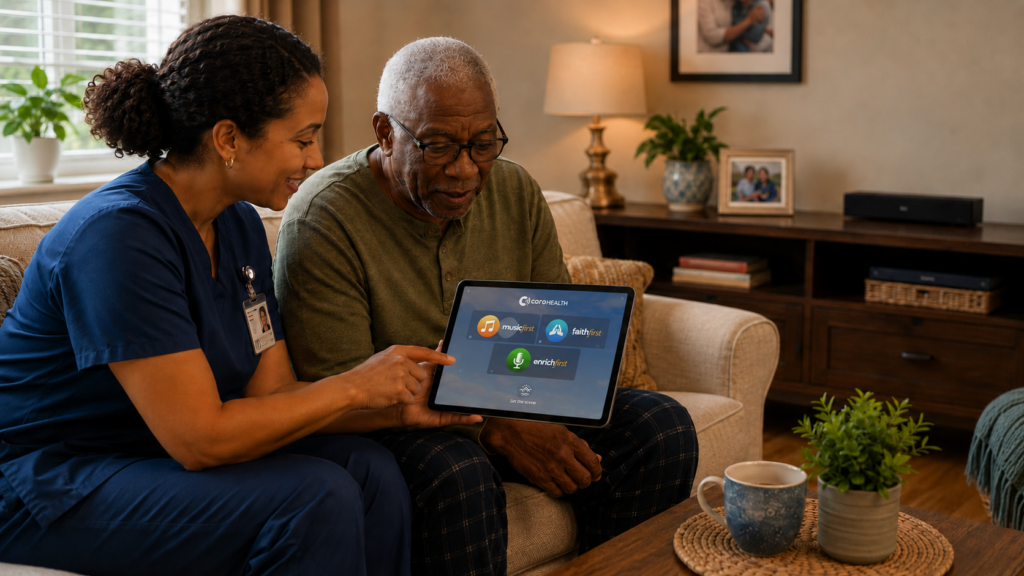
Home health agencies provide essential services that help people remain safe and supported in their own homes. Nurses, therapists, aides, and other professionals may assist with medication management, rehabilitation, personal care, monitoring, and daily routines.
However, receiving care at home often includes needs that extend beyond the clinical task list. People may also be managing isolation, anxiety, grief, changing routines, or a loss of independence.
Whole-person care recognizes these emotional, spiritual, and social needs while keeping each visit practical and focused.
Small Moments Can Change the Care Experience
Person-centered care does not always require a lengthy activity or major change to the visit. It may begin with a small, thoughtful choice that helps the interaction feel more personal.
Examples include:
- Playing familiar music during a routine task
- Offering time for prayer or reflection
- Listening to a radio program together
- Starting a conversation with music trivia
- Using an audiobook during a rest period
- Asking about musical or spiritual preferences
These moments can help a visit feel less transactional. They may also help caregivers learn more about the person behind the care plan.
A favorite song, faith tradition, story, or radio program can reveal meaningful information about someone’s identity, interests, and preferences.
Supporting Caregivers Without Adding Complexity
Home health teams already manage demanding schedules, travel time, documentation, care coordination, and clinical responsibilities.
Any additional resource needs to be simple to access and easy to use. Agencies can support staff by providing ready-to-use tools rather than expecting caregivers to search for appropriate music, spiritual content, or engagement activities independently.
Helpful resources should:
- Require little preparation
- Fit naturally into existing visits
- Offer options for different preferences
- Support active and quiet moments
- Be appropriate for professional care settings
- Remain consistent across care teams
Agency-supported resources can also help ensure that whole-person care does not depend entirely on one caregiver’s preparation or personal subscriptions.
Addressing Emotional, Social, and Spiritual Needs
A person receiving home health services may spend long periods without regular social interaction. A visit can provide clinical support while also creating a meaningful point of connection.
Familiar music, a story, or a radio program may help begin a conversation and make the visit feel more personal. Learning what someone enjoys can also help future visits feel more familiar and comfortable.
Illness, recovery, grief, and changes in independence may also raise spiritual concerns. Some people may value prayer, meditation, sacred readings, or quiet reflection, while others may prefer nonreligious content focused on calm and personal meaning.
Agencies can support person-centered care by providing inclusive resources while respecting each client’s beliefs and preferences.
Creating a More Consistent Agency Experience
Providing shared resources across an agency can help care teams deliver a more consistent experience.
Instead of relying on each caregiver to find suitable content, agencies can offer approved tools that are available across visits and care settings. This gives staff more ways to connect with clients without requiring complicated new programs.
How Coro Health Supports Home Health Agencies
Coro Health gives home health agencies access to three services designed to support more meaningful care experiences.
MusicFirst offers purposeful, fully licensed music for relaxation, routines, movement, and connection. FaithFirst provides inclusive spiritual resources for prayer, reflection, reassurance, and comfort. EnrichFirst includes audiobooks, radio programs, trivia, and other engagement content.
Together, these tools help agencies extend person-centered care beyond the clinical task list while keeping resources practical for busy care teams.
Learn how Coro Health supports home health agencies:
https://corohealth.com/for-home-health/