
Whole-Person Care at Home: Supporting Mind, Spirit, and Connection
Home Health care is often focused on what can be measured: medications, mobility, wounds, symptoms, safety, and daily tasks. These are essential parts of care, but they are not the whole picture.
For many older adults, receiving care at home can also bring emotional, spiritual, and social challenges. A person may feel isolated, anxious, uncertain, or disconnected from the routines that once gave their days meaning.
That is why whole-person care at home matters. For Home Health agencies, whole-person care means supporting not only the clinical task, but also the emotional environment around the person receiving care.
What Is Whole-Person Care at Home?
Whole-person care at home means recognizing that health is more than clinical treatment. It includes the emotional, spiritual, cognitive, and social needs that shape how someone feels during care.
During Home Health visits, this can look like:
- Creating a calm environment during care tasks
- Supporting familiar routines
- Making space for prayer, reflection, or meditation
- Reducing feelings of loneliness through connection
- Using music, stories, and familiar content to bring comfort
- Helping the visit feel more personal and less clinical
The goal is simple: help older adults feel cared for as people, not just patients.
Why Emotional Wellness Matters in Home Health Care
Home can be comforting, but receiving care at home can also feel vulnerable. Older adults may feel frustrated by changes in independence, mobility, memory, or health. Some may feel anxious when a caregiver arrives, especially if the visit includes personal care, therapy, medication support, or difficult transitions.
Emotional wellness affects how people respond to care. When someone feels calm, safe, and respected, daily routines can become easier. A bath, meal, therapy session, or medication reminder may feel less stressful when the care environment is supportive.
Small moments can make a difference. A familiar song, a meaningful conversation, a quiet prayer, or a moment of reflection can help shift the tone of a visit.
Supporting the Spirit During Home Health Visits
For many older adults, spirituality is part of identity. It may come through faith, prayer, sacred readings, meditation, gratitude, music, or personal reflection.
In Home Health care, spiritual support can be especially meaningful during:
- Illness or recovery
- Grief or loss
- Memory changes
- End-of-life care
- Periods of fear, uncertainty, or loneliness
Spiritual care at home does not have to be complicated. During a care visit, it may be as simple as listening to a prayer, offering a moment of reflection, playing a familiar hymn, or creating space for quiet comfort.
The important thing is that the support feels respectful, personal, and appropriate for the individual’s beliefs.
Engagement Helps People Feel Connected
Engagement is not only about keeping someone busy. It is about helping them feel present, interested, and connected.
During Home Health visits, meaningful engagement may include listening to a familiar story, enjoying old-time radio, singing along to a favorite song, watching a short couch concert, or using music trivia as a light moment of connection.
These moments can bring structure to the visit and create opportunities for conversation. For someone living with memory changes, familiar content can be especially powerful. A song, voice, story, or theme from the past may spark recognition and emotion when other forms of communication feel difficult.
Why Home Health Teams Need Simple, Licensed Resources
Home Health providers often work with limited time. They may want to provide emotional support, spiritual care, and meaningful engagement, but they need resources that are easy to use in real care situations.
The best resources are flexible. They can support a quiet one-on-one moment, a calming transition, a care task, or a family-supported visit led by the care team. They should help caregivers respond to the person in front of them without adding complexity to the day.
Coro Health services are designed for use through care organizations. In Home Health, that means the agency’s care team can bring Coro Health programming into the visit through the caregiver’s device, helping support the care environment while staying aligned with licensing requirements.
Bringing Whole-Person Care Into Home Health Visits
Care at home can become more meaningful when emotional and spiritual support are built into the visit.
For example, a Home Health caregiver may:
- Play calming music before a stressful care task
- Use a familiar song during a morning or evening routine
- Offer a prayer, meditation, or reflection during quiet time
- Start a conversation after an audiobook or old-time radio program
- Use sing-alongs or trivia to encourage participation
- Choose content that reflects the person’s background, interests, and beliefs
These small practices can help older adults feel more grounded, less alone, and more connected during the moments when care is being delivered.
How Coro Health Supports Whole-Person Care at Home
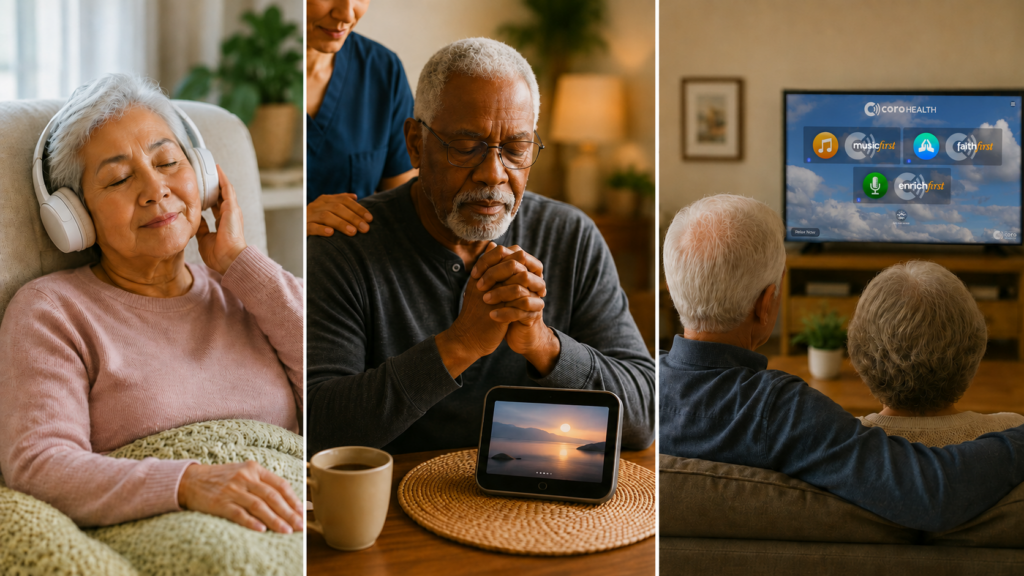
Coro Health helps care teams support the whole person through therapeutic music, spiritual care, and engagement programming.
MusicFirst brings personalized therapeutic music into care visits, helping create moments of calm, recognition, and emotional connection.
FaithFirst supports spiritual wellness with multi-faith prayers, meditations, sacred readings, and reflective content that care teams can use during meaningful moments of support.
EnrichFirst helps spark engagement through Audiobooks, Care Radio, Sing-Along, Music Trivia, Old Time Radio, and Couch Concerts, giving Home Health teams simple ways to bring familiar, uplifting content into the visit.
Together, these services help Home Health agencies bring comfort, meaning, and connection into everyday care.
Learn more about Coro Health.