
How Familiar Music Helps Reduce Anxiety and Agitation in Dementia Care
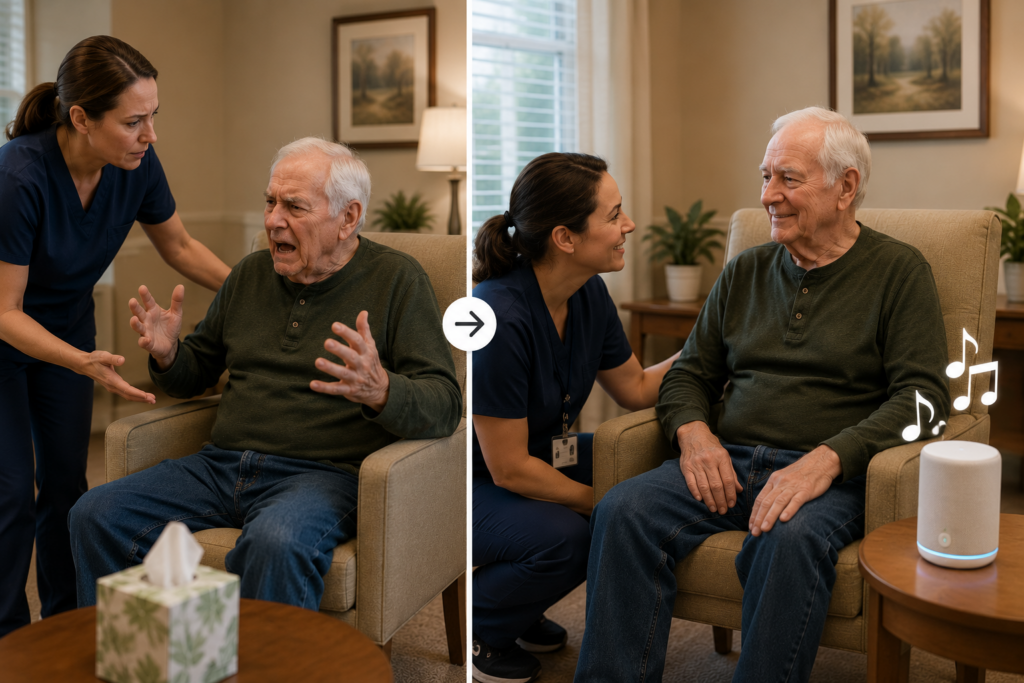
Anxiety and agitation are common challenges in dementia care. A resident may become restless during transitions, overwhelmed by noise, resistant to daily routines, or distressed when they cannot express what they need.
For caregivers and senior living teams, these moments can be difficult to manage. While every person’s experience with dementia is different, one simple tool continues to show meaningful promise: familiar music.
Why Agitation Happens in Dementia Care
Agitation is not simply “bad behavior.” It is often a form of communication.
A person living with dementia may feel confused, overstimulated, uncomfortable, afraid, or unable to understand what is happening around them. Changes in routine, unfamiliar faces, personal care tasks, loud environments, or fatigue can all increase distress.
That is why non-drug dementia support matters. Before turning to medication alone, care teams often look for ways to reduce stress, create comfort, and help the person feel safe.
Why Familiar Music Can Help
Music has a unique connection to memory, emotion, and identity. A song from someone’s youth, a favorite hymn, a wedding song, or music tied to family traditions can reach beyond confusion and reconnect the person with something familiar.
For some residents, music can help shift the mood of a room. For others, it may offer a calming structure during bathing, mealtimes, rest, or sundowning. Familiar music can support emotional well-being by creating moments of recognition, comfort, and connection.
Personalization Matters
Not every song will calm every person.
For therapeutic music to be effective, it should match the individual’s history, preferences, culture, mood, and current care goal. A lively song may encourage movement during an activity, while a softer familiar melody may help during a moment of distress.
Care teams can ask:
- What songs did this person love when they were younger?
- What music connects to their faith, family, or culture?
- What sounds seem to soothe them?
- What music should be avoided?
When music is personal, it becomes more than entertainment. It becomes a bridge to comfort and connection.
Supporting Caregivers, Too
Agitation affects residents, but it also affects caregivers, families, and staff. When a person is distressed, everyone in the room feels it.
Familiar music can give caregivers a gentle way to redirect attention, support routines, and connect without relying only on words. In dementia care, that can make everyday moments feel more human.
Bringing Therapeutic Music Into Daily Care
Therapeutic music does not replace clinical care. It supports it.
It can become part of everyday dementia care during morning routines, personal care, meals, quiet rest periods, or moments when a resident begins to show signs of anxiety. Over time, familiar songs can become cues for safety, rhythm, and reassurance.
How MusicFirst Supports Dementia Care
Coro Health’s MusicFirst helps senior living, memory care, and healthcare teams bring personalized therapeutic music into daily care with purpose. With curated music programs designed to support emotional and cognitive needs, MusicFirst helps create moments of calm, recognition, and connection when words are not enough.
Learn more about MusicFirst by Coro Health.