
Dining Music Will Be Served
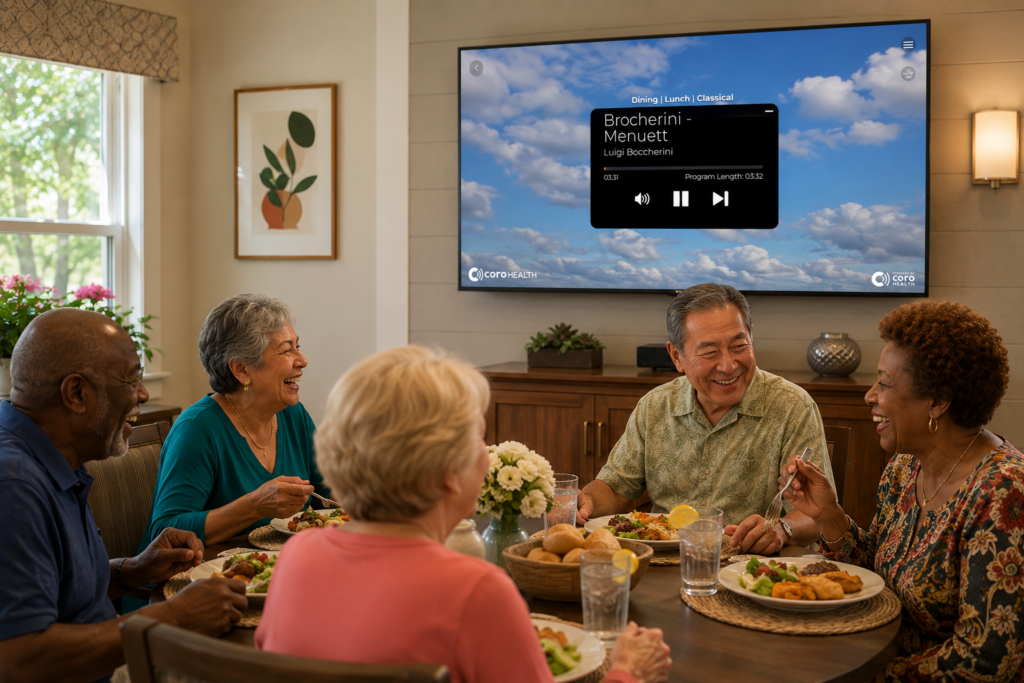
Dining is an important part of daily life in senior living. Meals provide nourishment, but they also create opportunities for routine, conversation, connection, and enjoyment.
Lighting, seating, service, noise levels, and music all contribute to the dining atmosphere. When music is selected with purpose, it can help create a space that feels more welcoming and appropriate for the moment.
Different Meals Need Different Energy
Breakfast, lunch, and dinner each have their own rhythm. Morning music may need to feel gentle, familiar, and uplifting, while lunch may benefit from selections that bring energy to the room without competing with conversation.
Dinner may call for a calmer atmosphere that supports the transition into the evening. Special events, cafés, private dining rooms, and holiday meals may require something different again.
Communities can consider:
- What kind of energy should the room have?
- Does the music fit the time of day?
- Can residents hear one another comfortably?
- Are the selections familiar and appropriate?
- Does the music support the intended atmosphere?
Serving the same playlist for every meal may be convenient, but it can make the dining experience feel repetitive.
Volume and Selection Both Matter
Even well-chosen music can become distracting when it is too loud. Dining rooms already contain conversation, dishes, service activity, mobility equipment, and other sounds.
Music should add warmth without making communication more difficult. Tempo also plays a role. Music that feels too fast may make the room feel rushed, while music that is too slow may lower the energy more than intended.
A thoughtful dining music program considers:
- Volume
- Tempo
- Genre
- Familiarity
- Resident preferences
- Time of day
- Lyrics
Small adjustments can make a noticeable difference in how the room feels.
Familiar Music Can Encourage Connection
Music often carries personal meaning. A familiar melody may remind someone of a favorite performer, a celebration, a dance, or a meaningful period of life.
These associations can create natural opportunities for conversation. Residents may identify songs, share memories, or connect with tablemates over a common musical preference.
Music does not need to become the center of attention to add value. It can simply make the dining environment feel warmer and more personal.
Create Consistency Across Dining Spaces
Many senior living communities have formal dining rooms, cafés, private rooms, and event areas.
Without a structured approach, music choices may depend entirely on which employee is working. A consistent program helps communities maintain an intentional atmosphere while adapting selections for different meals, residents, and settings.
It also reduces the need for individual staff members to create playlists or rely on personal streaming accounts.
Build More Purposeful Dining Experiences With MusicFirst
MusicFirst by Coro Health helps senior living and care organizations use fully licensed music more intentionally across dining spaces.
Communities can create listening experiences for breakfast, lunch, dinner, cafés, celebrations, and special events without expecting staff to manage every playlist independently.
With purposeful selection and consistent access, music is what needs to be served at all mealtimes. It can become part of a thoughtful dining experience that supports digestion, comfort, conversation, and connection.
Learn more about MusicFirst:
https://corohealth.com/music-first/