
Why Music Reaches Seniors When Words No Longer Can
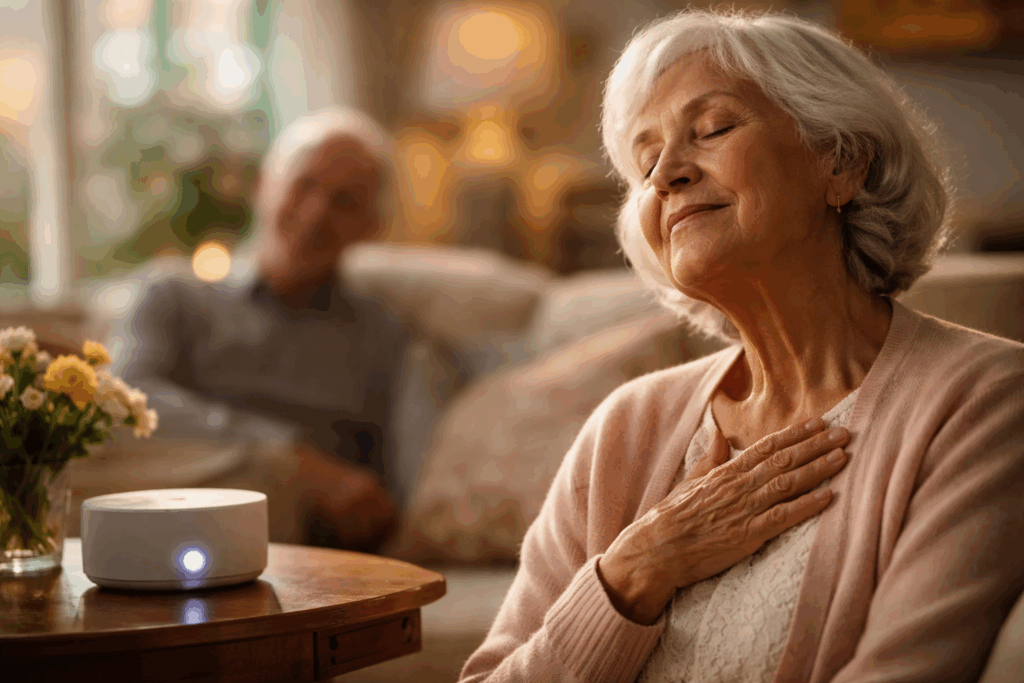
As people age, communication often changes. Words may become harder to find. Conversations may slow. For individuals living with dementia or cognitive decline, language can gradually lose its reliability as a tool for connection.
Yet something remarkable remains. Music.
Again and again, caregivers and families witness moments when a resident who struggles to speak hums along to a familiar melody, suddenly taps their foot in rhythm, or smiles in recognition. These moments are not accidental. They are rooted in how the brain processes music.
Music Lives Where Language Does Not
Language is largely processed in areas of the brain that are often affected early by Alzheimer’s disease and other forms of dementia. Music, however, engages multiple regions at once, including areas tied to emotion, memory, and movement.
This is why music often remains accessible even when speech declines. A familiar song can activate emotional memory pathways that words cannot reach, creating a connection without requiring explanation or effort.
Music does not ask residents to remember facts or form sentences. It meets them exactly where they are.
Emotion Comes Before Words
Long before language develops, humans respond to sound. Rhythm, tone, and melody communicate safety, comfort, and familiarity. These emotional cues remain deeply embedded throughout life.
For seniors, especially those experiencing cognitive change, music can:
- Reduce agitation and anxiety
- Improve mood and emotional regulation
- Encourage engagement without pressure
- Restore a sense of identity and dignity
Music offers reassurance when verbal reassurance no longer lands.
Music as a Tool for Connection in Care
In senior living and memory care communities, connection is not built through conversation alone. It is built through shared experience.
Music creates moments of togetherness that feel natural and inclusive. A resident does not need to remember lyrics to feel connected. Simply listening, moving, or responding emotionally is enough.
Care teams often see increased eye contact, calmer behavior, and improved participation when music is used intentionally throughout the day.
Why MusicFirst Is Different
MusicFirst by Coro Health is designed specifically for senior living and healthcare environments. It is not a collection of random playlists. It is a therapeutic music platform grounded in research and built to support emotional and cognitive well-being.
MusicFirst programs are curated to:
- Match different times of day and care moments
- Support calm, focus, or social engagement
- Reduce stress and agitation
- Create consistency and emotional safety
Because when music is used with intention, it becomes a form of care.
When Words Fade, Music Remains
Music does not require memory, logic, or language. It speaks directly to emotion and experience. For seniors who struggle to communicate, music offers a way to be seen, understood, and connected without words.
At Coro Health, MusicFirst helps communities use music not as background noise, but as a meaningful tool for connection, comfort, and dignity.
Because when words no longer work, music still can.